
New Wooden Pallets

When people think about wooden pallets, they usually picture the standard blue or brown ones that show up on delivery trucks. But for a lot of businesses, those off-the-shelf pallets are a poor fit. The dimensions are wrong, the weight capacity is uncertain or the construction creates problems further down the supply chain. That is where new custom pallets come into play and that is where McVantage brings something different to the table.
McVantage has been in the wood business for four generations. That kind of history matters because it means they have seen just about every packaging scenario you can imagine. We know what works and what fails and they have the practical experience to build pallets that do exactly what you need them to do without the hidden costs of a one-size-fits-all approach.
What a New Custom Pallet Actually Is
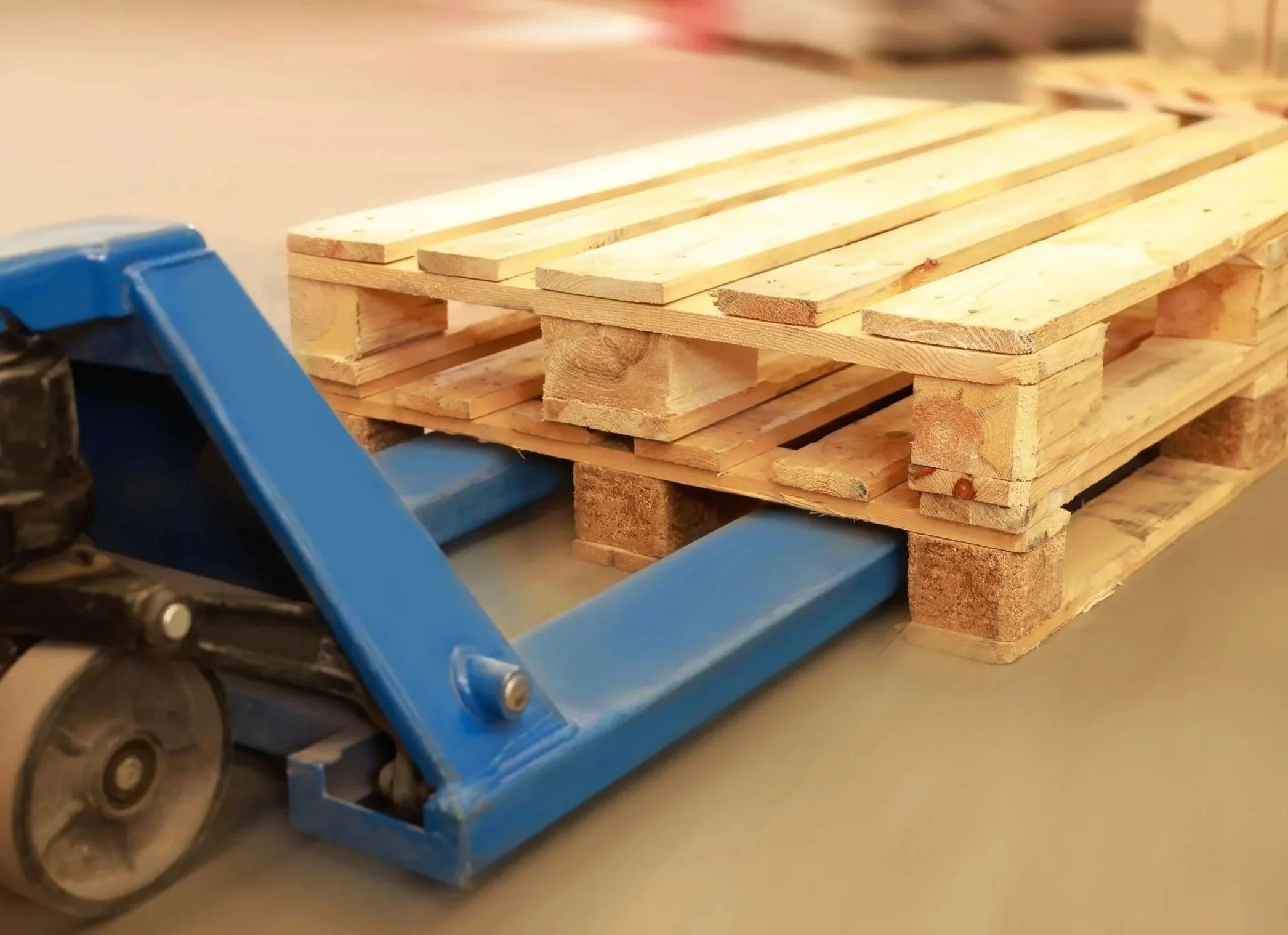
A new custom pallet is not simply a wooden frame with some nails in it. It is a piece of engineered equipment that has to protect your product, support the weight of stacking in a warehouse, survive the jolts of a forklift and do all of this while keeping your total shipping costs under control. The design process starts with questions about what you are shipping, how heavy it is, what the dimensions are and how far it needs to travel.
McVantage uses the Pallet Design System software to run the numbers and figure out the right lumber grade, board thickness and fastener pattern for each situation. This software is not about being flashy. It is about doing the math so that your pallet does not fail in the middle of a shipment. You get a design that holds up under real-world conditions, not something that looks nice on a drawing board but falls apart on the loading dock.
Materials and Construction Options
New pallets can be built from a variety of materials and the choice depends on what you are moving and where it is going. Most standard pallets use hardwood or softwood lumber, but McVantage also works with plywood and OSB for situations where you need a solid deck surface. We can build stringer pallets, which are the familiar two-way entry design or block pallets that allow four-way entry for easier handling.

There are plenty of add-on features that make a big difference in daily use beyond the basic structure. Lag bolts give you extra holding power compared to standard nails, which matters for heavy loads that shift during transit. Dado and band grooving create channels that help stabilize cylindrical items so they don’t roll around. Clip corners and raggle sticks protect the edges of your product from damage when the pallet gets bumped.
Stenciling might sound like a small detail, but having your company name, part numbers or handling instructions printed directly on the pallet saves time and reduces mistakes in a busy warehouse. Heat treating is another option for companies that ship internationally, because it meets the ISPM 15 requirements for exporting wooden packaging. McVantage takes care of the heat treating and stamps each pallet with the proper markings so you don’t have to think about compliance when your shipment reaches customs.
Why Material Choice and Construction Matter
Wood’s not all the same and the species you choose affects how the pallet performs. Oak and hickory are tough woods that hold up to heavy loads and rough handling, but they are heavier and cost more. Pine and poplar are lighter and less expensive, which works fine for lighter duty cycles or one-way shipments where the pallet isn’t coming back.

McVantage sources our own lumber and we run it through our scragg mill in Tuscumbia, Alabama. That means we control the raw material from the log forward, instead of buying random boards from different suppliers and hoping for consistent quality. If you need a pallet that can handle repeated trips through a closed-loop system, we can choose lumber grades and construction methods that match that requirement. If you need a lightweight pallet for a single export shipment to keep freight costs down, we can do that too.
The Role of Pallets in Your Operations
A new wooden pallet is the interface between your product and the entire transportation network. If the pallet fails, your product gets damaged, your shipment gets delayed and your customer gets frustrated. That is why taking time to get the pallet design right pays off in fewer claims and smoother logistics.
We work with customers across automotive, food and beverage, industrial manufacturing, military and chemical sectors. Each industry has its own rules and its own demands. Food grade applications need clean, splinter-free lumber and sometimes require specific treatments. Heavy industrial parts need extra bracing and thicker deck boards. Medical devices and fragile equipment benefit from foam inserts and shock-absorbing designs that cushion the load during transit. We have experience with all of these situations and can recommend construction details that match your specific product profile.
Sustainable Sourcing and Responsible Manufacturing
Wood pallets have a sustainability advantage over plastic and metal alternatives because wood is renewable and naturally breaks down at the end of its life. McVantage takes this further with our recycling program that purchases used pallets, repairs what can be reused and recovers lumber from broken pallets for use in combo pallets that mix new and recycled material.
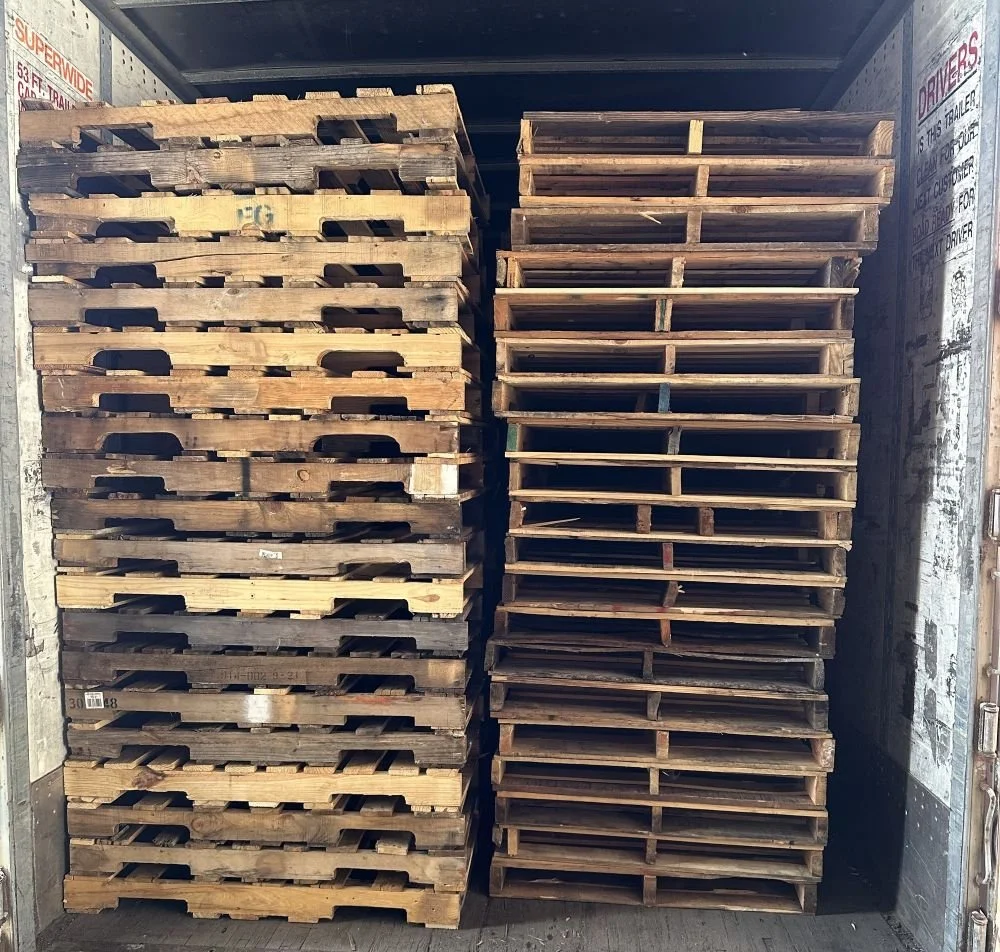
Pallets in the “Buy Back” program: McVantage Packaging will repair, repurpose or recycle the used pallets.
Our membership in the National Wooden Pallet and Container Association and their EPD certification means the environmental impact of their products has been measured and verified. This matters to companies that track their carbon footprint or have sustainability goals to meet. Choosing a new wooden pallet from McVantage gives you a product that performs well and aligns with environmental responsibility.
New Versus Recycled Pallets
One common question is whether to buy new pallets or recycled ones. The answer depends on your needs. Recycled pallets cost less up front and work fine for many applications where the pallet only makes one trip. But new pallets give you consistency. Every board is new, every nail is properly placed and every pallet meets the same specifications. For automated systems that rely on uniform dimensions, for heavy loads that require known strength ratings or for international shipping that demands heat treatment documentation, new pallets are often the right choice.
McVantage makes both new and recycled pallets at their facilities in Tuscumbia, Alabama and Nashville, Tennessee. This gives us the flexibility to offer combo pallets that use new lumber for the load-bearing components and recycled lumber for less critical parts, which balances cost and performance without sacrificing safety.
Getting the Details Right
When you order new wooden pallets from McVantage, they walk through the design with you, figure out the dimensions and specifications that match your product and run the engineering calculations to make sure the pallet holds up. We build a sample if you want to test it in your own facility. Then we produce the full order with consistent quality from the first pallet to the last.
The two facility locations mean fast turnaround and shorter shipping distances for customers across the Central and Southeastern United States. Whether you need a hundred pallets or a thousand, we have the production capacity to fill your order without extended lead times. Our staff has over 250 years of combined experience in wood products, so you are getting advice from people who have handled practically every kind of packaging challenge.
If you are tired of making your product fit a pallet that doesn’t quite work, it might be worth talking to McVantage about a new custom design. We build pallets that match your product instead of making you adjust to someone else's standard.